Last updated November 23, 2026
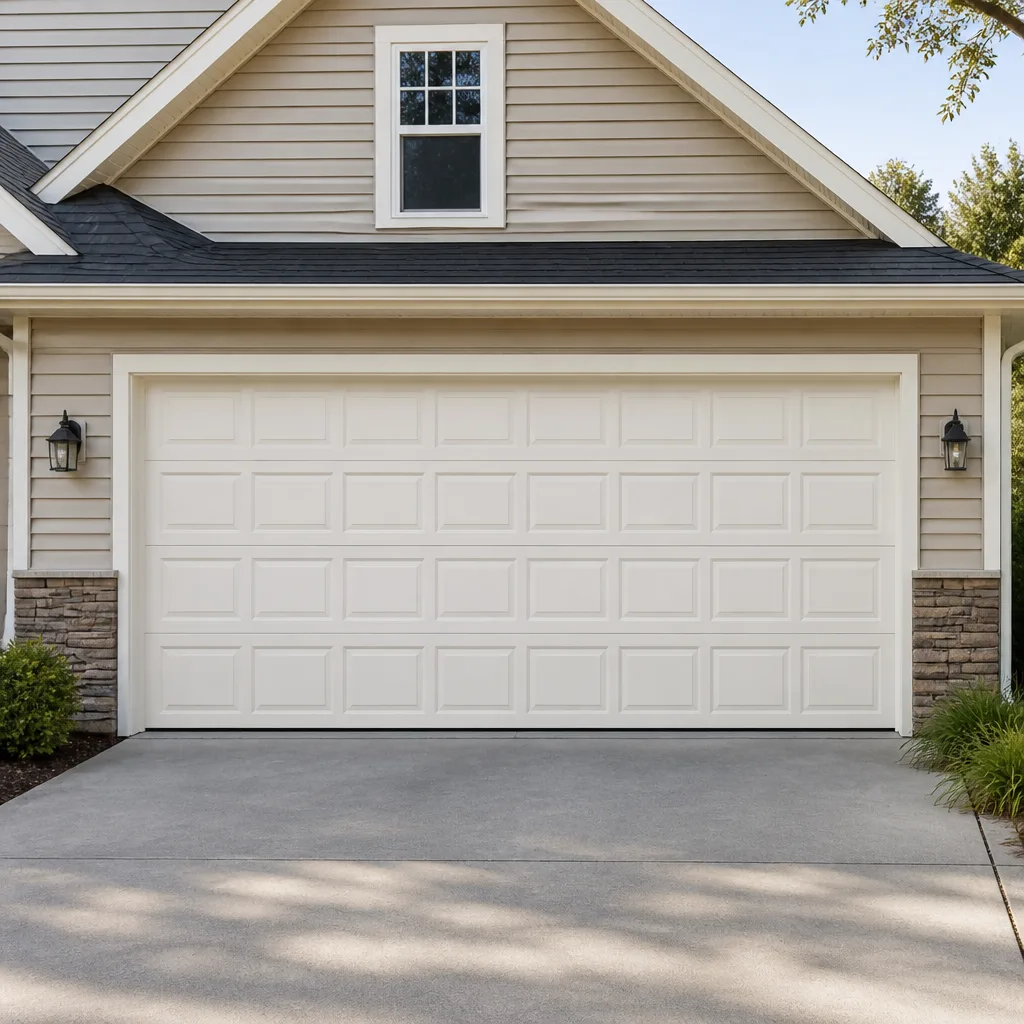 Raised-panel steel
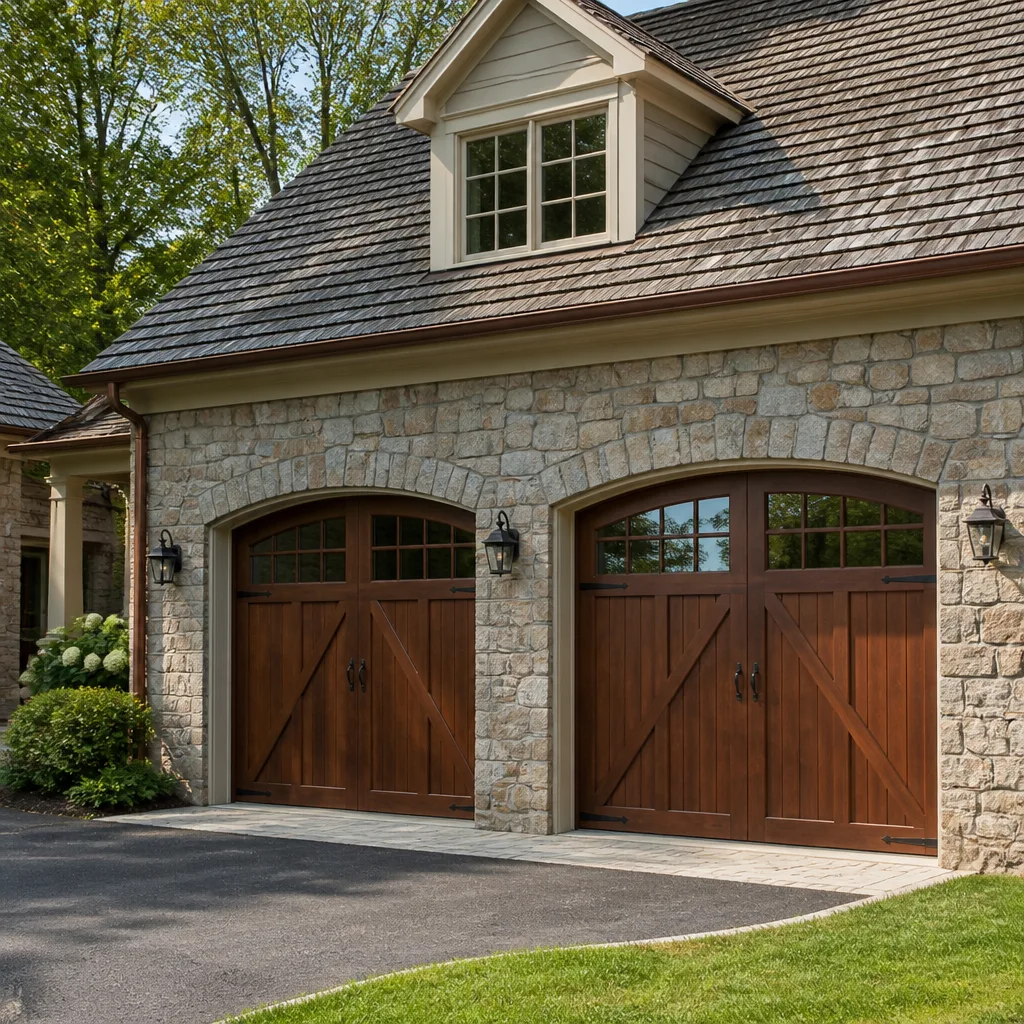 Carriage house
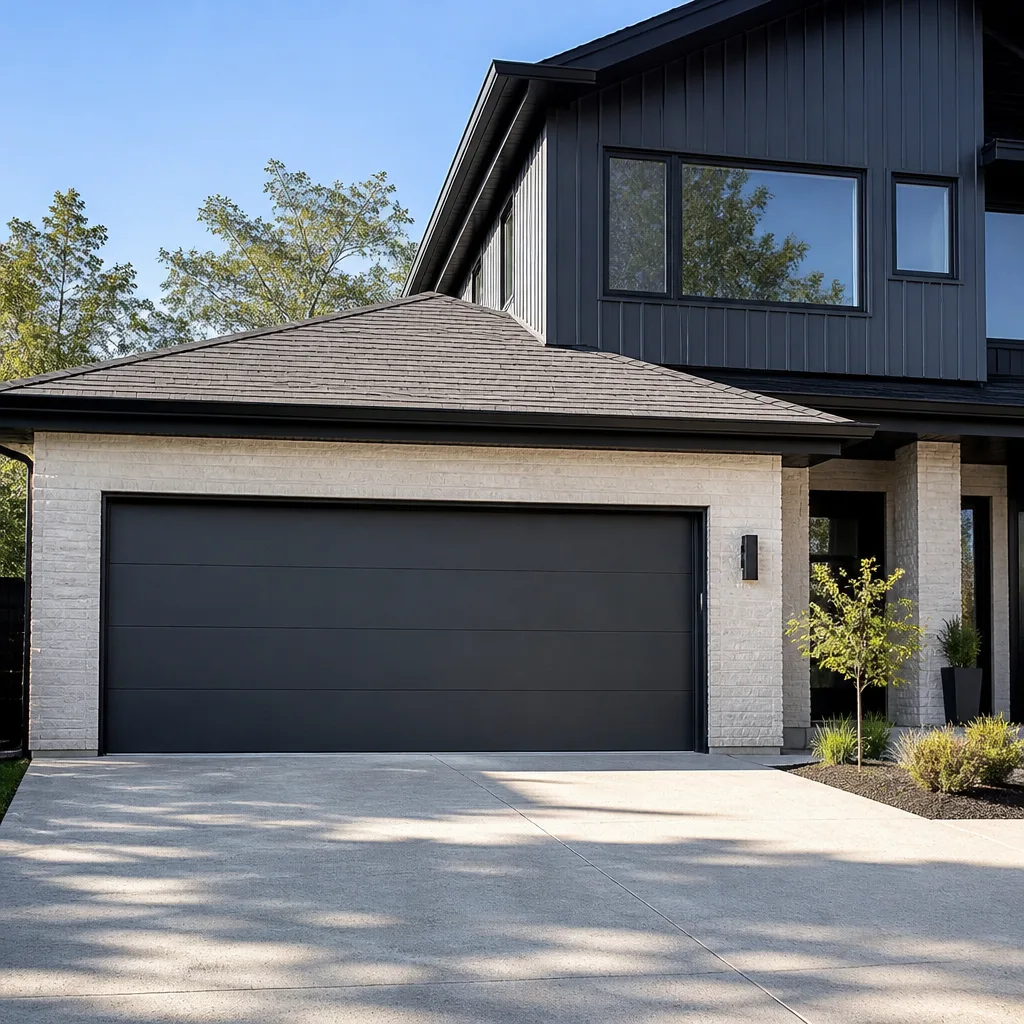 Modern flush
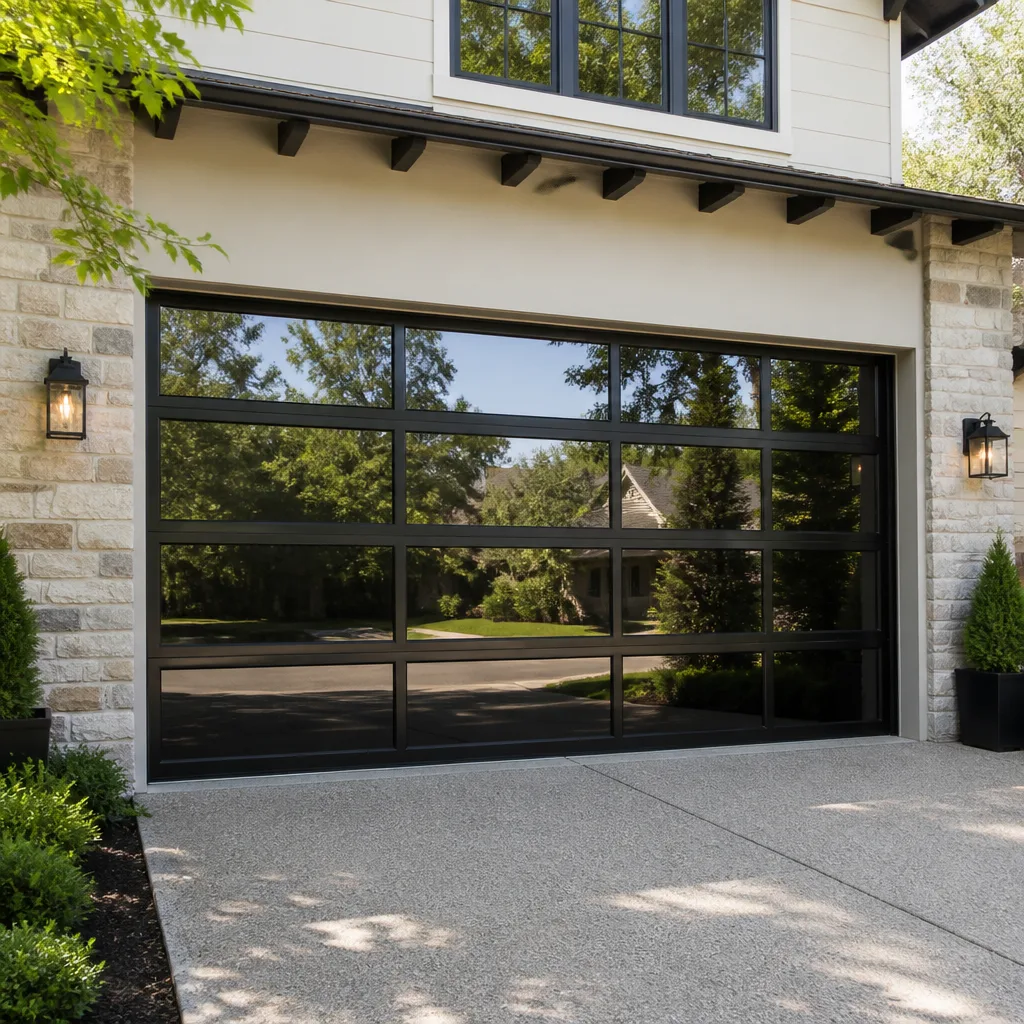 Full-view glass
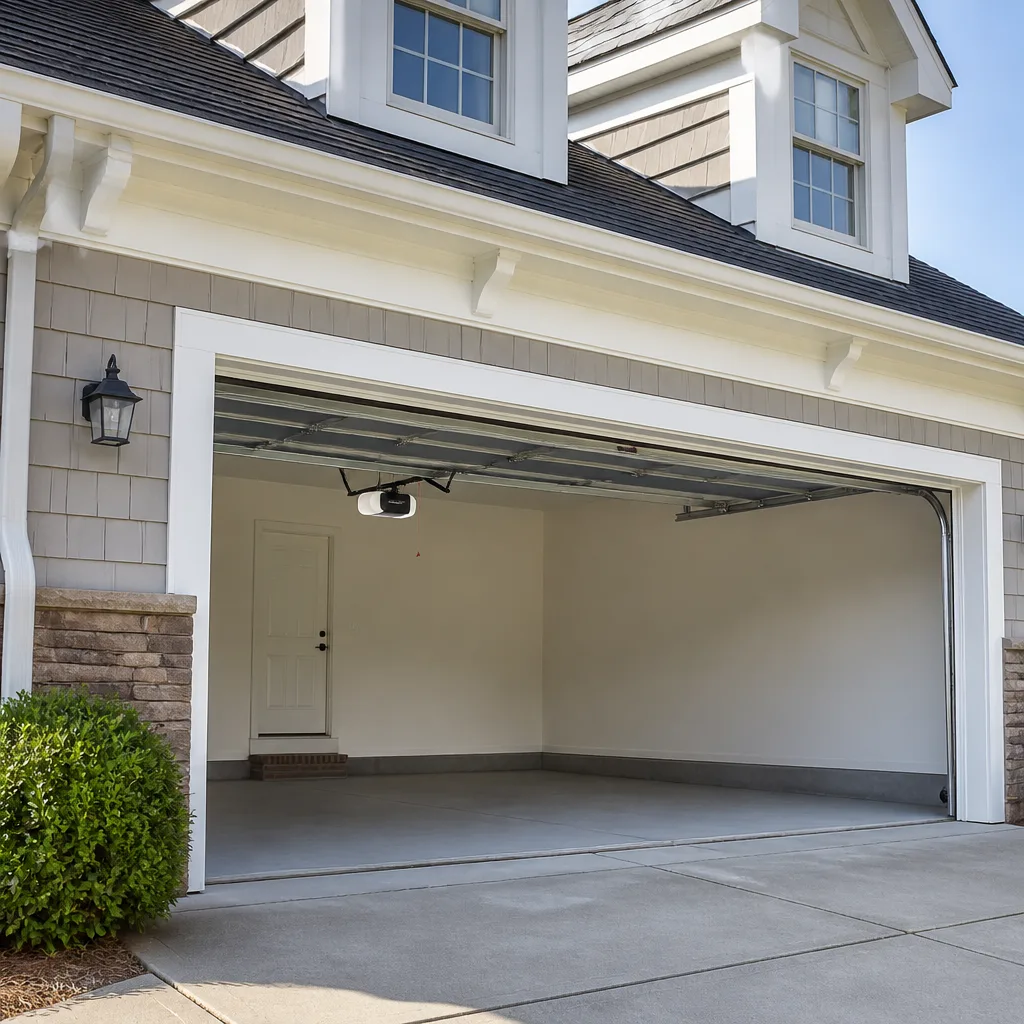 LiftMaster openers
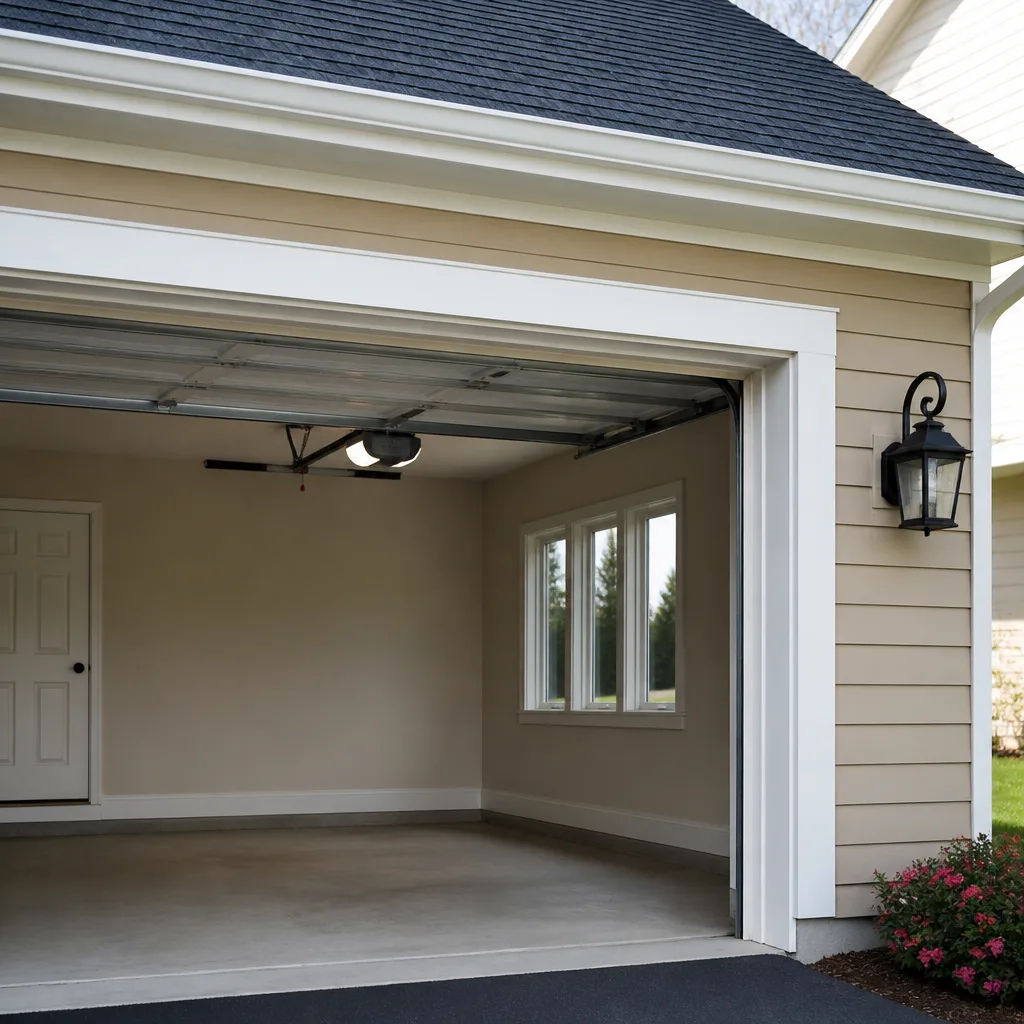 Chamberlain openers
Full 25-point door and opener safety check with every visit - springs, cables, rollers, tracks, and your LiftMaster or Chamberlain opener included
You get a price before we start. It does not change when the pro arrives.
Get your free estimateChoosing the Right Garage Door Brand: A Buyer’s Guide for Duluth
Most brand advice for garage doors is written for a national audience, and it shows. It ranks companies by advertising spend, warranty length in years, and how many styles appear in a catalog. None of that answers the question a Duluth homeowner actually has: when this door breaks in the middle of a Georgia summer, who can fix it, how fast, and with what part? A brand that leads a consumer survey can still be a poor fit for Duluth if every replacement component has to ship from a factory three states away. This guide is about picking a brand you can actually live with here – one with parts on the shelf, service people who know the hardware, and construction that holds up to Gwinnett County heat, humidity and storms. We’ll walk through what matters, what’s marketing, and how to decide.
Quick Answer
The right garage door brand in Duluth is the one with local parts availability, a service network that knows its hardware, and construction matched to Georgia’s heat and humidity – not the one with the biggest ad budget. For most homeowners here that means a major, widely serviced brand like Clopay or Amarr for the door itself and LiftMaster or Chamberlain for the opener, chosen for how easily each can be repaired rather than for a catalog rating. Insulation and steel gauge matter, but only when paired with thermal-break construction and a warranty a local pro can actually process.
Styles & brands we work with
- Raised-panel steel
- Carriage house
- Modern flush
- Full-view glass
- LiftMaster openers
- Chamberlain openers
Table of Contents
- Why National Brand Rankings Miss the Point in Duluth
- Parts and Service Availability in the Duluth and Gwinnett Market
- How Insulation Ratings Translate to Real Energy Performance in Georgia
- Steel Gauge: Where the 25 vs. 27-Gauge Decision Actually Matters
- Which Warranties Are Practically Enforceable
- Matching Brand Finish and Style to Gwinnett County HOA Rules
- Opener Brands and the Repair-First Philosophy
- A Step-by-Step Way to Choose
Why National Brand Rankings Miss the Point in Duluth
National surveys tell you which brand a thousand strangers bought, not which brand a technician in Duluth can get parts for on a Tuesday. Those are different questions, and the second one is the one that decides whether your car sits in the driveway for a week. A garage door is the largest moving part of your home, and the brand behind it matters most on the day something fails.
Here’s the disconnect. A brand can top a consumer ranking on the strength of retail placement and marketing spend, while its less-common models use proprietary components that only the factory supplies. When a torsion spring snaps or a roller carrier cracks, a pro who works on that brand regularly has the part or knows where to get it locally. A pro who doesn’t is stuck waiting on a factory order.
In our experience, the brands that hold up best in this market are the ones with deep service networks – the manufacturers whose components show up in local supply channels rather than only through a single corporate portal. LiftMaster, Chamberlain, Genie, Clopay, Amarr, Wayne Dalton, Craftsman and Raynor all have service pathways in the metro Atlanta area, but the depth varies by product line. A builder-grade door from a major name can be simpler to source parts for than a premium door from a brand with thin distribution.
For Duluth specifically, that gap between “popular nationally” and “serviceable locally” is the whole game. A door that can’t be repaired the same week is a liability, especially in July when the humidity is high and the heat is relentless. Choosing a brand is really choosing a repair relationship.
Parts and Service Availability in the Duluth and Gwinnett Market
Parts availability is the single most underrated factor in choosing a garage door brand in Duluth. A brand with a fast local supply chain keeps your repair moving; a brand with factory-only parts turns a one-hour fix into a two-week wait. Before you commit to any door or opener, ask how easily its parts can be sourced locally.
What counts as a “part” here spans more than you might think:
- Springs – torsion and extension springs are sized to the door’s weight, so the right one has to be matched. Common sizes are easier to source locally.
- Rollers and hinges – usually standard, but some premium doors use proprietary roller carriers.
- Opener components – gears, logic boards, remotes and safety sensors vary a lot by brand and even by model year.
- Cables, drums and brackets – mostly common, though heavy custom doors can need specific hardware.
- Weather seals and bottom astragal – easy to overlook, easy to special-order.
LiftMaster and Chamberlain, both under the same parent company, share a lot of internal engineering, which means opener parts and accessories tend to be widely stocked across the Atlanta metro. That breadth is why our team is factory-familiar with those lines and can usually diagnose an opener fault without guesswork. Wayne Dalton and Clopay doors are common enough in Gwinnett County subdivisions that their standard hardware is easy to come by, while specialty finishes or custom sizes can still require an order.
Duluth sits in the heart of Gwinnett County, where a large share of homes were built across a fairly short span of years. That means a lot of doors and openers share a handful of common model families, and the parts for those families are easier to find here than in a market where every builder picked something different. If you’re weighing brands, lean toward the ones with that kind of local footprint. For a repair on a door you already own, garage door repair is where we start.
How Insulation Ratings Translate to Real Energy Performance in Georgia
R-value is the most quoted number in garage door shopping and one of the most misunderstood. In Georgia’s climate, insulation helps – but only when the construction actually keeps heat from moving around the insulation rather than through it. A high R-value on a door with a weak thermal break can underperform a lower-rated door built better.
Two things decide how much a door’s insulation really does for a Duluth home:
- Insulation type and fill. Polyurethane foam insulates better per inch than polystyrene, and full-door foam fill beats a few panels of foam board. A door with an insulated face and an uninsulated core is a compromise.
- Thermal break construction. This is where the metal frame is separated so it can’t conduct heat straight through the door. Without it, the steel itself works like a radiator, and the R-value on the label flatters real performance.
Why it matters here specifically: Georgia summers are hot and humid, and the garage often shares at least one wall with the house. A garage that reaches oven temperatures in July pushes heat through that shared wall. If the garage is under a bedroom or a bonus room, the effect is worse. Insulation that works reduces that load.
But don’t overbuy. If your garage is detached, unconditioned, or used mainly to park in, a moderately insulated door does the job; the upgrade from a basic steel door to an insulated one is worth it, while chasing the highest R-value on the market rarely pays back the extra cost. If the garage sits under living space or you’ve converted part of it into a home gym or workshop, higher performance earns its price. The honest test is how much of your home touches the garage.
Our advice: pick the construction first, the R-value second, and ignore a catalog number that doesn’t tell you whether the door has a thermal break. When you’re ready to compare real options, a written estimate lays out both.
Steel Gauge: Where the 25 vs. 27-Gauge Decision Actually Matters
Steel gauge confuses buyers because the numbers run backward – a lower number means thicker steel. The 25-gauge versus 27-gauge choice is the most common decision in Duluth’s door market, and it matters more than the label suggests in a humid, storm-prone place. Here’s the honest breakdown.
27-gauge is thinner steel, common on builder-grade and budget doors. It moves a little more easily, weighs less, and costs less. It also dents more readily and can flex under a heavy impact, and the thinner panels are harder to keep quiet when the door cycles.
25-gauge is thicker and stiffer, which shows up in a few real ways:
- Dent resistance – a thicker panel handles a bumped trash can or a stray ladder better, which matters in a city where garages face driveways and side yards rather than deep lots.
- Stability in heat and humidity – thick steel holds its shape better when the summer air is heavy and panels cycle through hot days and cooler nights.
- Weight and balance – heavier doors demand properly matched springs. A spring sized for a lightweight door and fitted to a heavy one wears out faster.
- Quiet operation – stiffer panels rattle less, which you notice if a bedroom sits above the garage.
For Duluth’s humidity and storm environment, 25-gauge is the better long-term choice for most homes. It resists the dents and panel flex that come with summer weather, and it stands up to the everyday bumps a garage door gets in a busy household. 27-gauge still has a place – a rental, a strictly budget build, or a door that rarely sees traffic. The mistake is assuming thicker steel fixes everything. A 25-gauge door with cheap hinges and undersized springs will still disappoint, so specify the gauge and confirm the hardware that comes with it.
Which Warranties Are Practically Enforceable
A garage door warranty is only worth the claims process behind it. In Duluth, the brands worth choosing are the ones with a warranty your local pro can process, rather than one that requires a factory-direct claim that rarely moves forward. Read the fine print for how a claim actually works before you buy.
What separates an enforceable warranty from a decorative one:
- Who handles the claim. Some brands route claims through their dealer and service network, which means a pro familiar with that brand can often file and resolve quickly. Others push every claim to a central department where paperwork sits.
- What’s actually covered. Springs, hinges and rollers are wear items – a decades-long warranty that excludes everything that breaks isn’t much of a warranty. Check whether the moving parts are in or out.
- Pro-rating. A lifetime warranty that pays less every year you own the door is really a depreciating one. Ask what you’d actually receive if the panel fails in year ten.
- Labor exclusions. Many warranties cover the part and not the labor to install it. Read whether labor is included.
- Finish coverage. Some finish warranties cover paint or powder-coat failures only under certain conditions, and never if the door isn’t maintained.
In our experience, the brands that get used most often in this region – Clopay, Amarr, LiftMaster, Chamberlain among them – have claim paths that a factory-familiar technician can navigate. That’s not a guarantee, but it’s a real difference. When you get an estimate, ask the tech how a warranty claim would actually work on the door they’re recommending. A knowledgeable professional will have a straight answer, and an evasive one tells you something.
Keep your paperwork. A warranty is only as good as your ability to prove when the door was installed and by whom.
Matching Brand Finish and Style to Gwinnett County HOA Rules
In Gwinnett County, a garage door has to satisfy two audiences – your home’s architecture and your HOA. Brand finish and style choices are where those meet, and the brands worth choosing are the ones that offer durability without breaking the rules. Here’s how to pick without giving up performance.
Start with what your HOA actually controls. Most Gwinnett HOA guidelines target the color, panel style and sometimes visible hardware, because those are the parts that affect curb appeal. Before you fall for a finish, get the HOA’s written guidelines in hand:
- Check the approved color palette. Many HOAs in the Duluth area require neutral colors or a specific range – whites, creams, tans and browns are common. A bold finish you love may need approval.
- Match the panel style to the house. Raised-panel doors suit traditional homes; flush or carriage-house styles fit newer architecture. A brand’s catalog is not a blank check – the style has to work with the facade.
- Confirm the finish that carries the approval. Some brands offer the same style in both steel and composite, and the color options differ. Confirm the specific finish is available on the door you want.
- Ask about visible hardware. Decorative hinges and handles can be a style choice or an HOA issue, depending on the community. Confirm before you order.
- Get the approval in writing before the door is ordered. A door that meets code can still fail the architectural review, and returns are messy.
Durability doesn’t have to give way to style. Aim for a steel door with a factory-applied finish rather than a field-painted one – factory coatings hold up better to humidity. Clopay and Amarr both offer finish options that blend with Gwinnett subdivisions while keeping 25-gauge steel and a thermal break. That way the door passes the architectural review and still holds up to a Duluth summer.
Opener Brands and the Repair-First Philosophy
The opener is the part of the system most likely to fail first, and it’s the part where brand choice most often gets unnecessarily expensive. In our experience, a good rule is repair first, replace only when necessary. A stuck opener is often a single gear, logic board or sensor problem, not a dead unit. Our garage door opener repair work starts with diagnosis, not a quote for a new unit.
LiftMaster and Chamberlain dominate the opener market for good reason – they’re widely stocked, and their components are easy to source in the Atlanta metro. That shared engineering means a tech familiar with one is usually fluent in the other’s common faults. Genie is the other major name you’ll find on Duluth doors, and while its parts network is thinner, it’s still serviceable. Craftsman openers are common on older homes and share design lineage with the major brands.
Why repair-first matters for your wallet:
- Symptoms mimic failure. A door that won’t respond can be a dead logic board, a tripped safety sensor, a stripped gear or a broken spring on the door itself. Only diagnosis tells you which.
- Replacement is a real expense. A full opener replacement costs far more than a repair, and the old unit may have plenty of life left.
- Brand fluency prevents guesswork. A generalist handyman often replaces the whole opener because they can’t diagnose it. A specialist who knows the brand fixes the actual problem.
Springs are their own category. The torsion spring is the highest-tension, highest-risk component of any garage door system, and spring repair is dangerous without the right training. We handle garage door spring repair as a dedicated specialty, not a side job, because getting it wrong risks injury. If you hear a loud bang from the garage and the door won’t lift, stop using it and call.
A Step-by-Step Way to Choose
Here’s a repeatable way to choose a garage door brand in Duluth that puts serviceability and fit ahead of catalog rankings.
- Start with the job, not the brand. Are you repairing an existing door, replacing it, or buying new? A repair should favor whatever brand you already own and the pro who can service it; a replacement opens the field.
- Check local parts and service depth. Ask which brands the pro works on regularly and how they’d source a spring, a roller carrier or an opener board for the door you’re considering.
- Match construction to the room above. If the garage sits under living space or you’ve converted part of it, prioritize an insulated door with a thermal break. If it’s detached and unconditioned, a moderately insulated 25-gauge door is plenty.
- Specify the gauge and confirm the hardware. 25-gauge for most Duluth homes; check that springs, hinges and rollers are matched to the door’s weight.
- Ask how a warranty claim actually works. Confirm who files it, what’s covered, and whether labor is included.
- Get HOA approval before you order. Color and style in writing, from your HOA, before the door is built.
- Get a free measure and a written price. Installation work is measured, ordered and scheduled – so the right next step is a measured estimate, not a rush order.
When you’d rather have someone walk it through with you, Duluth Garage Door Repair Co gives free estimates and a written price before any work starts.
Common Mistakes to Avoid
- Choosing by ad ranking, not local serviceability. A brand that tops a national survey can still leave you waiting weeks for a part in Duluth. Check parts availability before you fall for the marketing.
- Trusting R-value without a thermal break. A high R-value on a door without thermal-break construction overstates what it will do in a Georgia summer. Look at the build, not just the label.
- Buying 27-gauge to save a little. Thinner steel dents more easily and flexes more in heat and humidity – a poor trade in this climate for most homes.
- Ignoring the opener’s brand and model. The opener is the most likely failure point. Shop for one whose parts are easy to source locally and whose faults a specialist already knows.
- Assuming a lifetime warranty covers everything. Wear items and labor are often excluded. Read the claim process before you count on it.
- Ordering a door before HOA approval. A style that suits your taste can still fail the architectural review in a Gwinnett County community. Get the color and style approved in writing first.
- Replacing an opener that only needed a repair. A dead door isn’t always a dead opener. Diagnosis first, replacement only when necessary.
See the difference
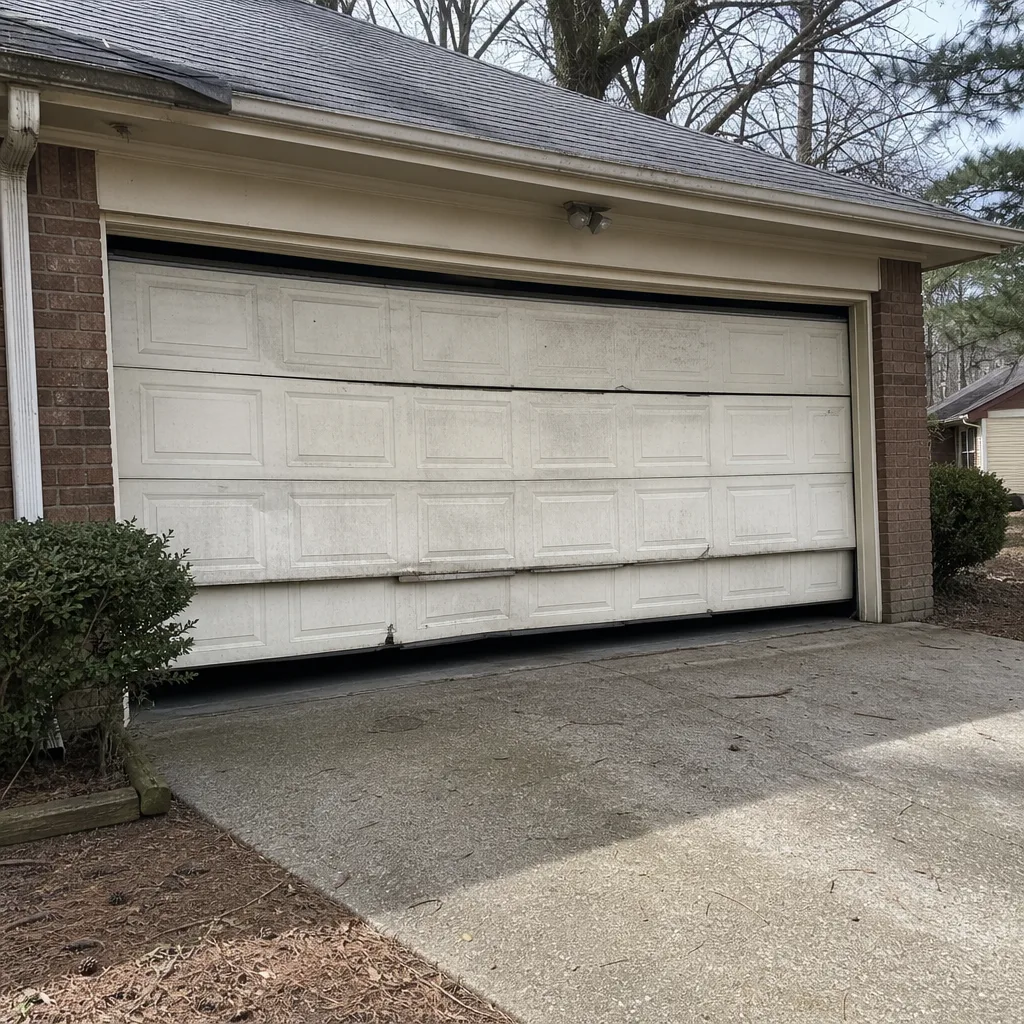 Before
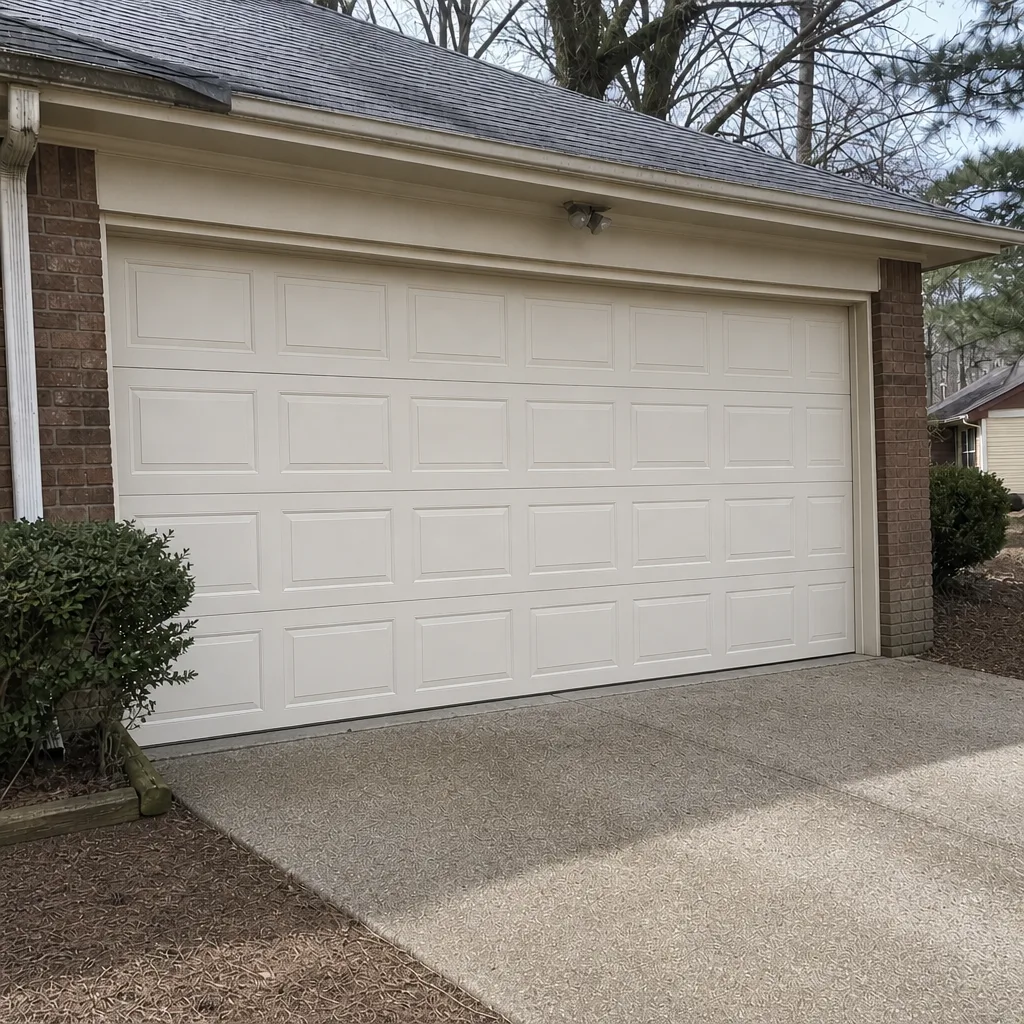 After
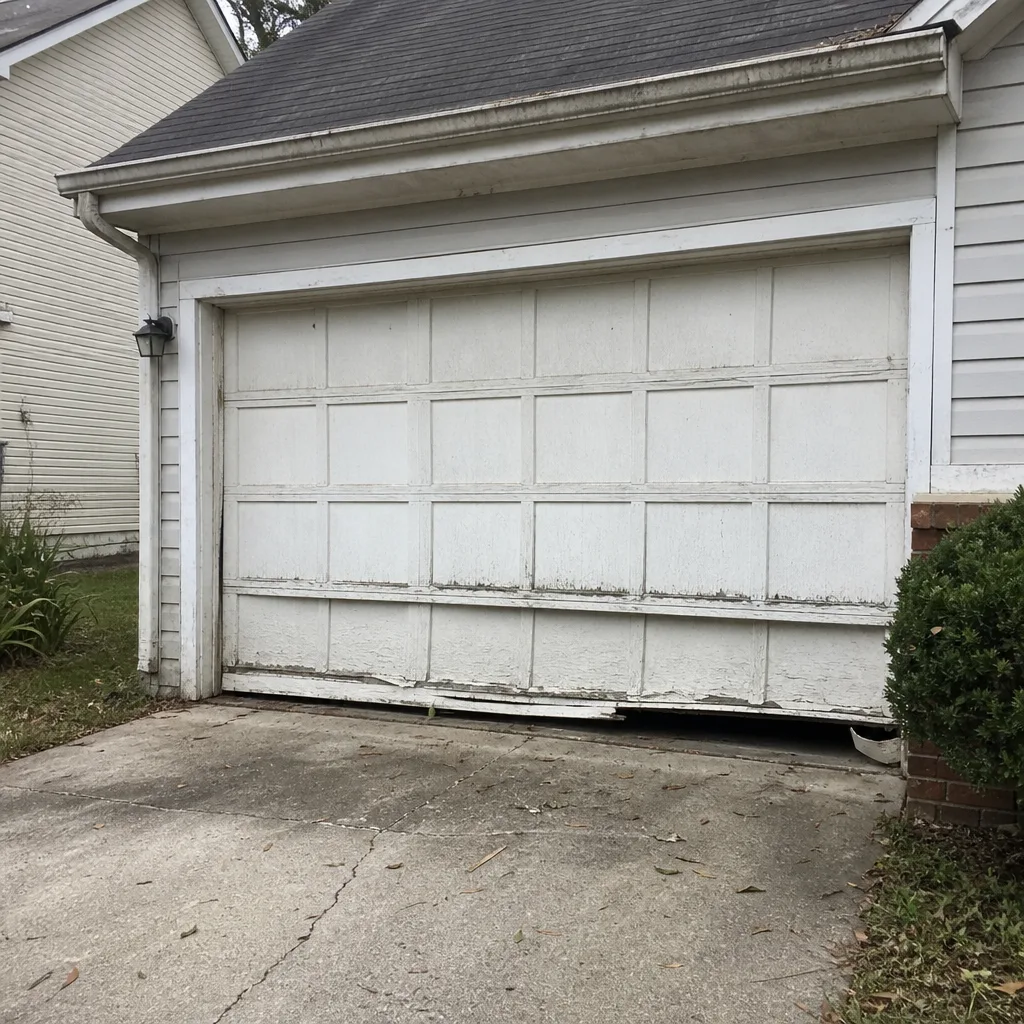 Before
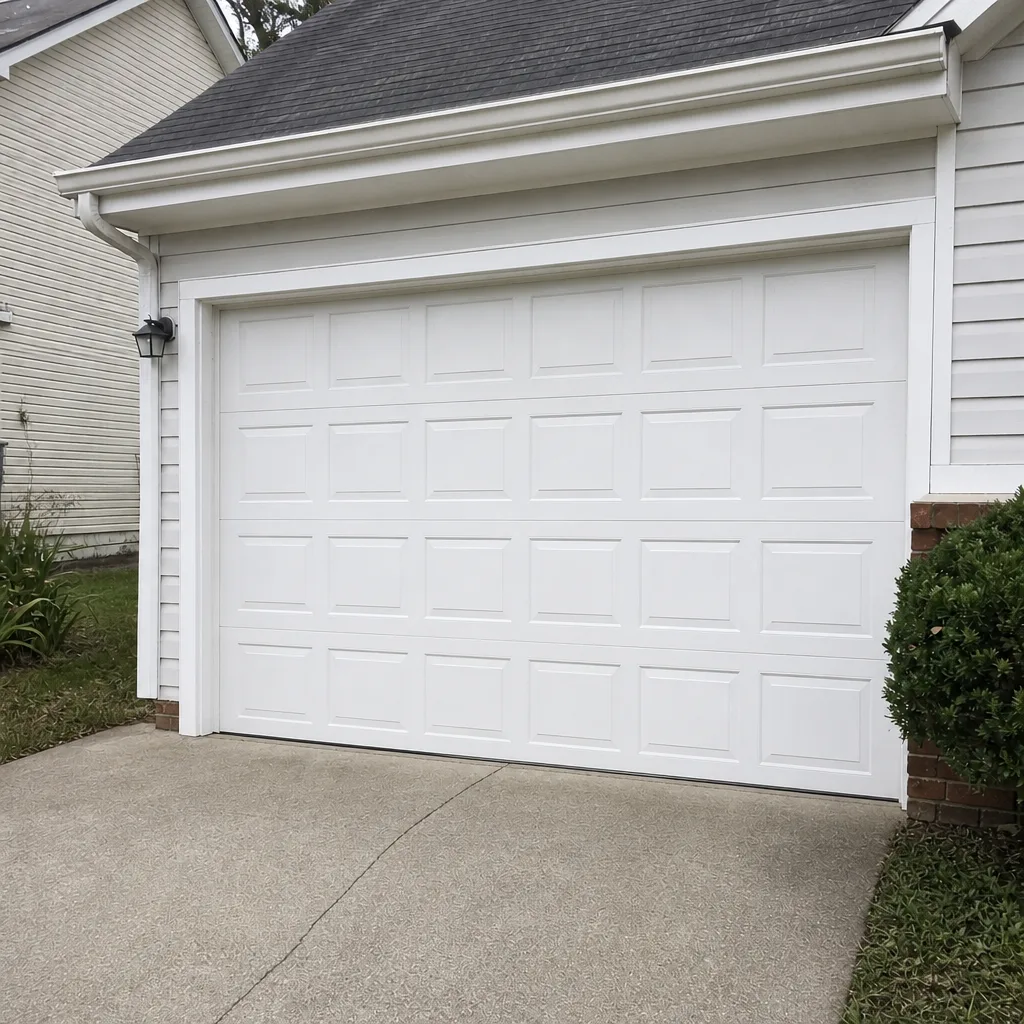 After
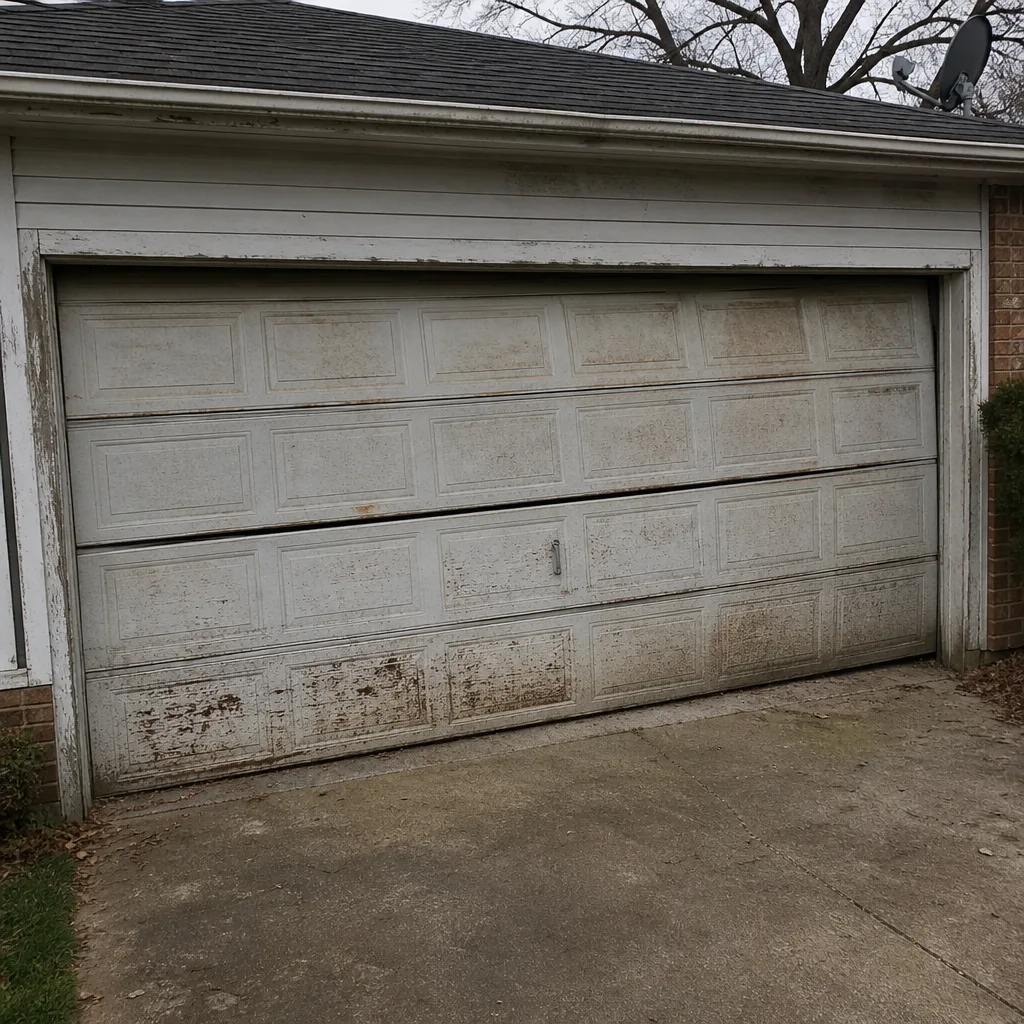 Before
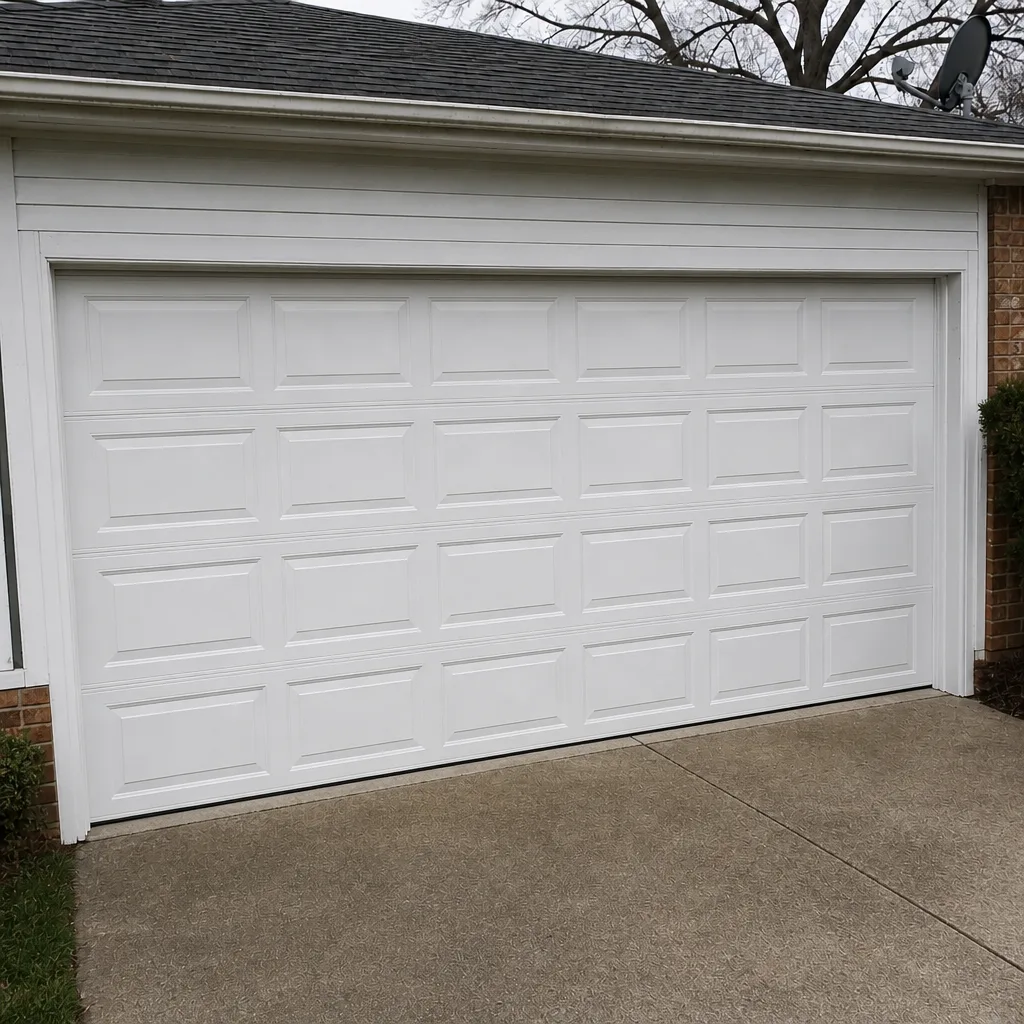 After
When to Call a Professional
Some garage door work is fine to watch and understand; some isn’t a DIY job. Call a professional if the door won’t open or close, if you hear a loud snap from the springs, if the door is visibly off its tracks or crooked, if the opener runs but the door doesn’t move, or if a cable is loose or frayed. Springs and cables carry extreme tension and can cause serious injury if handled without the right tools and training. Hitting a stuck door after a storm, a broken spring in the middle of summer, or an opener that’s stopped responding are all cases where a specialist saves you time, money and risk. If a door fails on a Saturday, you can call and we’ll book you for Sunday. Duluth Garage Door Repair Co offers free estimates in Duluth – call (833) 509-5428.
Frequently Asked Questions
The best brand for a Duluth home is the one with strong local parts availability, a service network that knows its hardware, and construction matched to Georgia’s heat and humidity – not the one with the biggest ad campaign. For most homeowners here, that means a widely serviced door brand like Clopay or Amarr with 25-gauge steel and a thermal break, paired with a LiftMaster or Chamberlain opener. Call (833) 509-5428 for a free estimate.
Yes – brand determines how quickly and cheaply a door can be repaired. A brand with a deep local parts network keeps a fix to hours or a day; a brand with factory-only components can mean a two-week order. Our technicians are factory-familiar with eight major brands, so we diagnose the actual system rather than guessing. Call (833) 509-5428 for an exact quote on any repair.
Only when the door also has thermal-break construction – otherwise the R-value flatters real performance. In Duluth, insulation pays off most when the garage sits under living space or has been partly converted. For a detached, unconditioned garage, a moderately insulated 25-gauge door is plenty. Call (833) 509-5428 to talk through the right option.
Most Gwinnett County HOAs limit approved colors and sometimes styles, so confirm the rules before you order. Ask your HOA for the approved palette and panel styles in writing, then match a brand’s finish options to those rules. We can help you find a durable finish that works within those limits. Call (833) 509-5428 for a free consultation.
Repair first, replace only when necessary – a stuck door is often a single gear, sensor or logic board problem, not a dead unit. A specialist diagnosis tells you which. Our opener repair work covers all major brands, including LiftMaster, Chamberlain, Genie, Craftsman and Raynor. Call (833) 509-5428 for an exact quote before any work starts.
No – the price is quoted and agreed before any work starts, and the written estimate sets the final price. That’s true whether you’re buying a new door, a repair, or an opener fix. Call (833) 509-5428 for a free estimate.
The Bottom Line
Choosing a garage door brand in Duluth is a serviceability decision first and a style decision second. Pick brands with real local parts depth – LiftMaster, Chamberlain, Clopay, Amarr among them – so a repair doesn’t turn into a factory wait. Match construction to Georgia’s heat and humidity: 25-gauge steel and thermal-break insulation for most homes. Confirm the warranty claim process, get HOA approval in writing, and favor repair over replacement where it’s safe. Our technicians have up to 9 years of experience and are factory-familiar with the major lines. For a free measure and a written price, call (833) 509-5428.
Written by the team at Duluth Garage Door Repair Co.